
Prints
A fine art print transforms a photographic image into a tangible, enduring object that engages the viewer in ways digital displays cannot replicate. Unlike digital images, which are constrained by the limitations of screen resolution, backlighting, and color accuracy variations, a well-crafted print offers a controlled and intentional presentation of an image. For high-magnification macro photography, especially when capturing intricate details of microscopic structures or abstract patterns in scientific phenomena, a print allows the viewer to experience the full depth, texture, and resolution of the image without the interference of pixelation or screen artifacts.
The physical nature of a print invites closer inspection, drawing the viewer into the details that might otherwise be lost on a digital screen. When photographing microscopic crystals under cross-polarized light or the complex structures of oil-on-water interactions, the ability to control how light reflects off the printed surface enhances the visual impact. Choosing paper, metal, or acrylic prints influence how details emerge, allowing for a level of artistic control that digital displays cannot provide. A carefully chosen format refines the presentation, adding subtle texture that enhances the perception of depth.
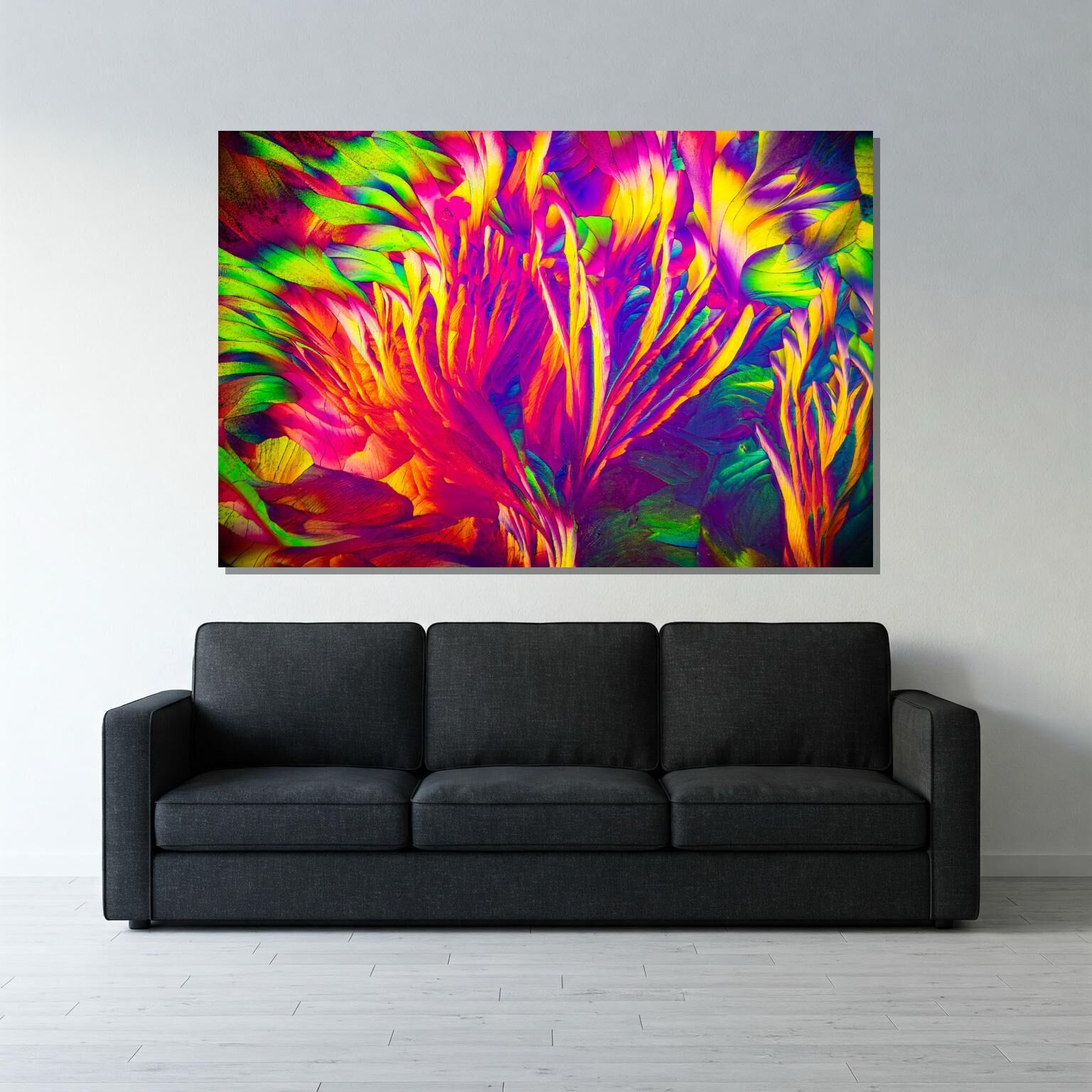
Prints also provide a consistent viewing experience, independent of screen calibration or ambient lighting conditions. A digital image may appear drastically different depending on the device used to display it, leading to inconsistencies in color, contrast, and sharpness. In high-resolution macro photography, where precise tonal gradations and fine structures define the image, any loss of fidelity can be detrimental. A fine art print ensures that the image is seen exactly as intended, preserving the photographer’s artistic vision without compromise.
There is an inherent permanence to a print that digital images lack. A print becomes an object—something that exists beyond the fleeting nature of digital files, which are susceptible to loss, corruption, or obsolescence as technology changes. Archival printing methods using high-quality pigment inks and acid-free papers ensure that an image remains vibrant and stable for decades, allowing scientific and artistic observations to endure. This is particularly important for work that documents natural phenomena, where images may serve both as artistic statements and as records of transient structures.
Another advantage of prints is their ability to engage with space in a way digital images cannot. A print on a wall commands attention, integrating with its environment and offering a viewing experience unencumbered by screen distractions. When a large-format print displays an extreme macro composition—whether a crystallized urea sample or the delicate structure of an insect’s compound eye—the immersive scale can reveal details that a digital screen cannot convey effectively. The interplay between physical space, image size, and viewer proximity enhances the appreciation of fine details.
The tactile quality of a print adds another dimension to the viewing experience. While a digital file is ephemeral, a print is an object with weight, texture, and presence. This physicality reinforces the connection between the viewer and the image, making the experience of observing a print more intentional and immersive than scrolling through images on a screen.
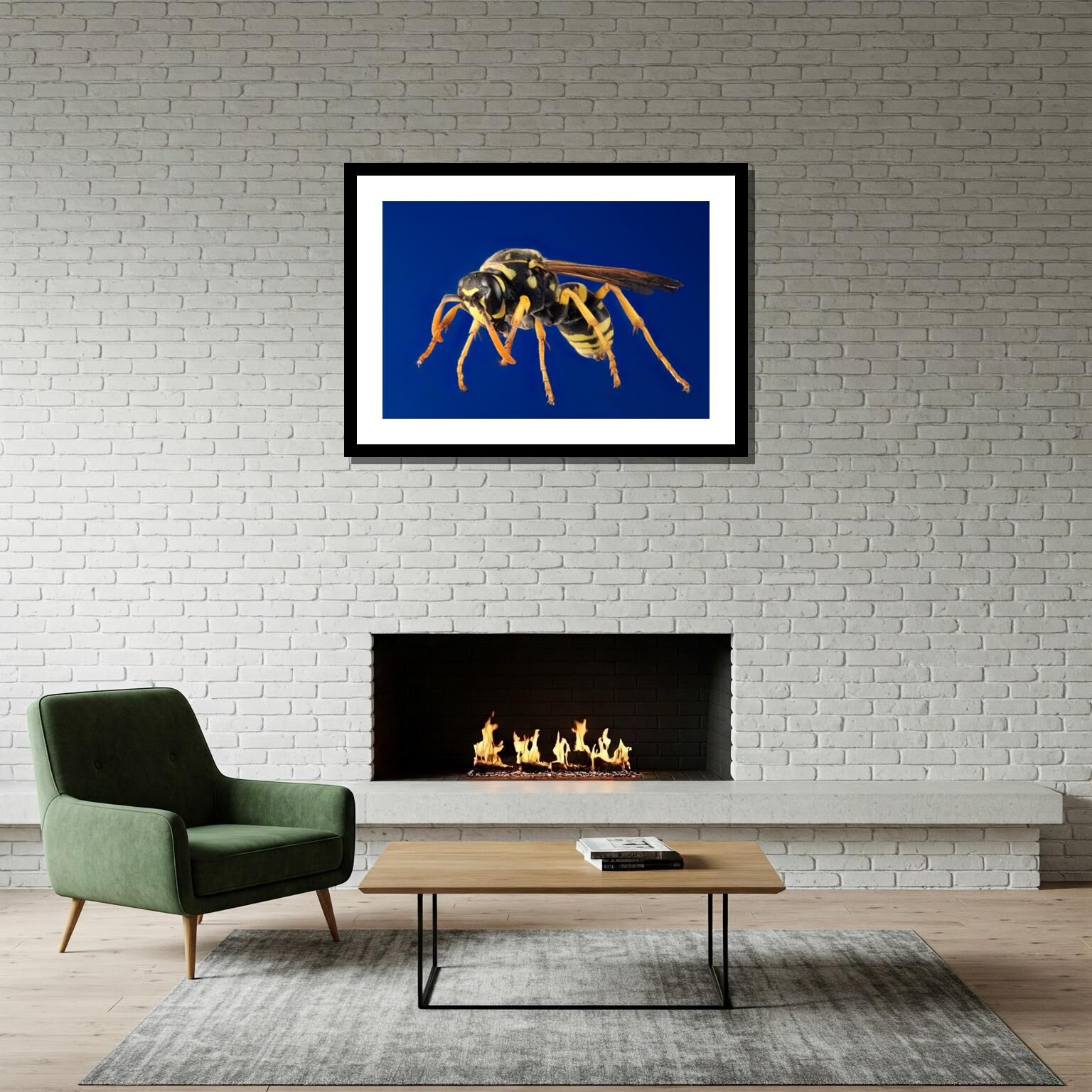
Prints possess an inherent exclusivity that enhances the value of photographic art. Unlike digital images, which can be infinitely reproduced and shared, a fine art print carries a sense of rarity and significance. The process of printing an image elevates it from a simple digital file to a tangible work, reinforcing its worth as both an artistic expression and a scientific record. In macro and scientific photography, where precision and uniqueness are essential, the physical presence of a print further emphasizes its significance.
Finally, the process of printing itself refines an image. Preparing a photograph for print demands meticulous attention to detail—adjusting contrast, sharpening selectively, and ensuring proper tonal range. This discipline forces a deeper engagement with the image, leading to a more deliberate and perfected final work. When presenting intricate, high-magnification compositions, the effort invested in creating a fine art print ensures that every nuance is preserved, making the final piece an irreplaceable artistic statement.
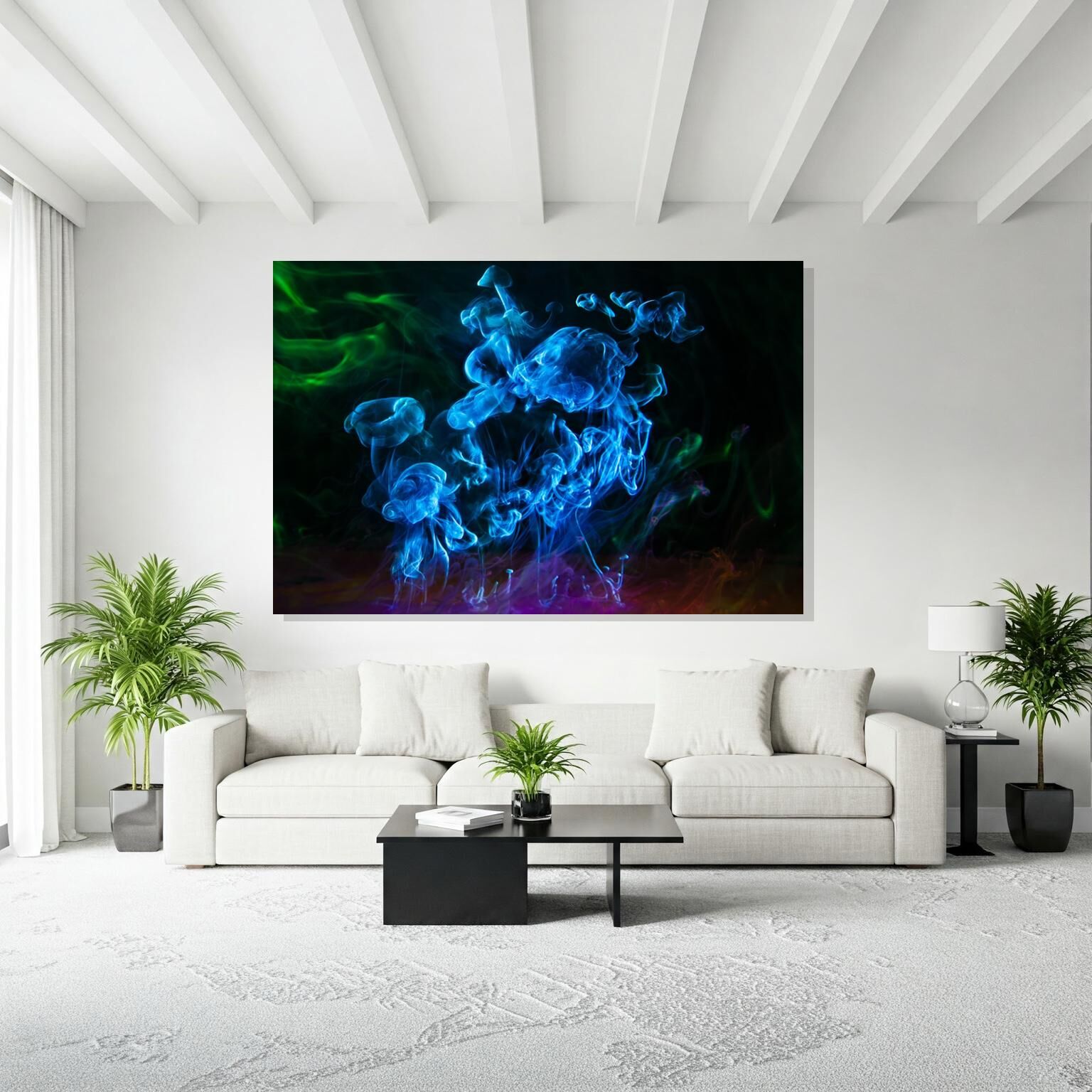
The above images are digital renderings to illustrate scale and framing options. Actual prints are available for purchase.
Fine Art Prints
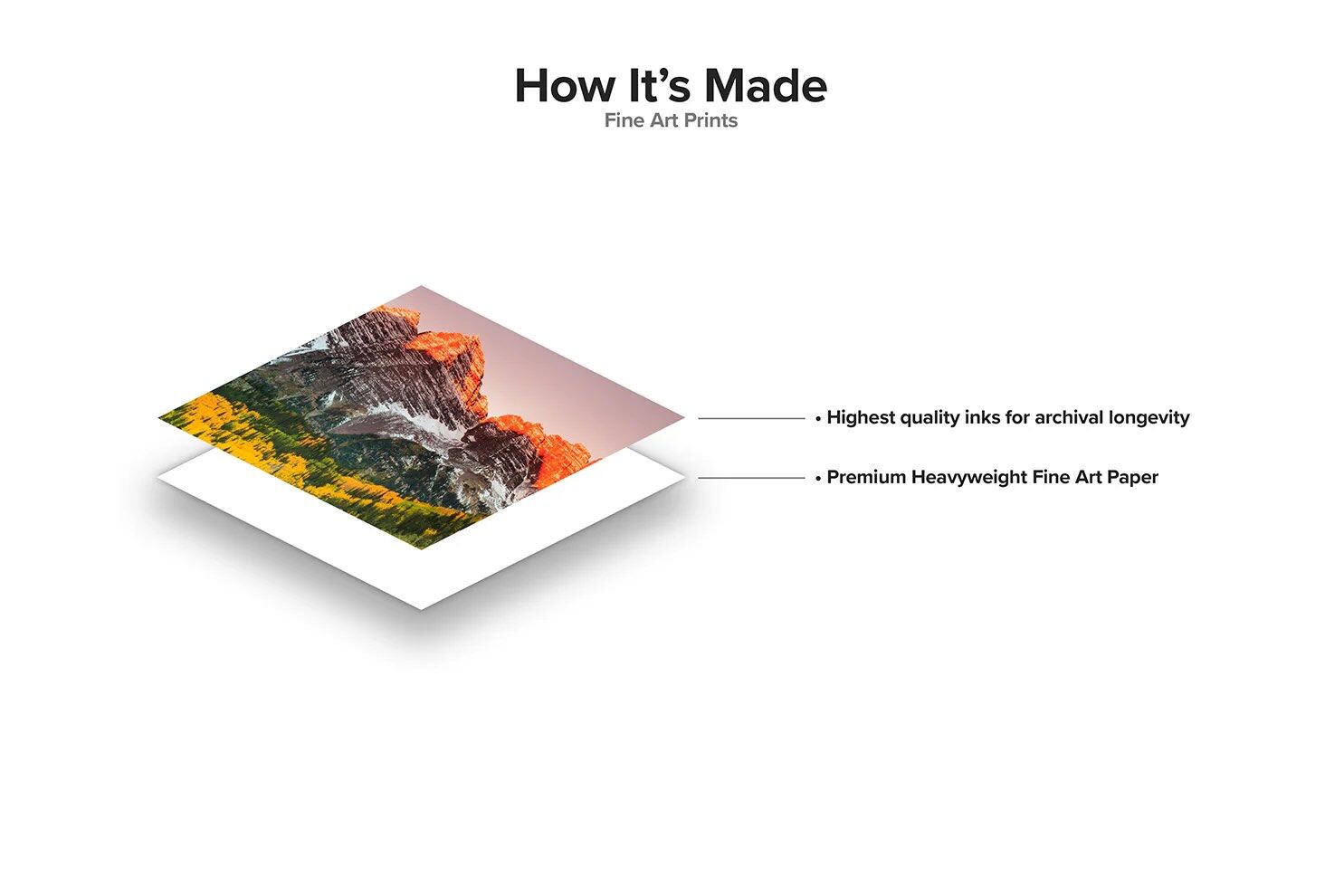
Bring the beauty of my photography into your space with museum-quality fine art prints. Each print is meticulously crafted to preserve the finest details, rich tones, and textures, ensuring a true-to-life representation of my work. Printed with archival inks on heavyweight, gallery-grade paper, these prints offer exceptional longevity and a sophisticated, exhibition-worthy finish.
Printing Process
Every fine art print is produced using premium archival inks on high-quality photo paper, resulting in outstanding clarity, depth, and color accuracy. This process ensures that each piece retains the essence and vibrance of the original image.
Shipping & Sizing
- All fine art prints are printed at actual size and trimmed without borders.
- Prints sized 8x12” and smaller are shipped flat.
- Prints larger than 8x12” are shipped rolled to prevent damage during transit.
Fine Art Paper Option
Canson Platine Fibre Rag – A premium, high-density smooth paper with a pure white base and a subtle luster finish. This paper blends the look and feel of traditional fine art materials with modern precision, delivering deep blacks, vibrant colors, and exceptional detail.
Metal Prints
One of the most popular ways to display vibrant imagery, glossy metal prints offer unmatched color depth, sharpness, and detail. With a sleek, modern finish, these prints enhance contrast and brilliance, creating a bold, eye-catching presentation.
How It’s Made
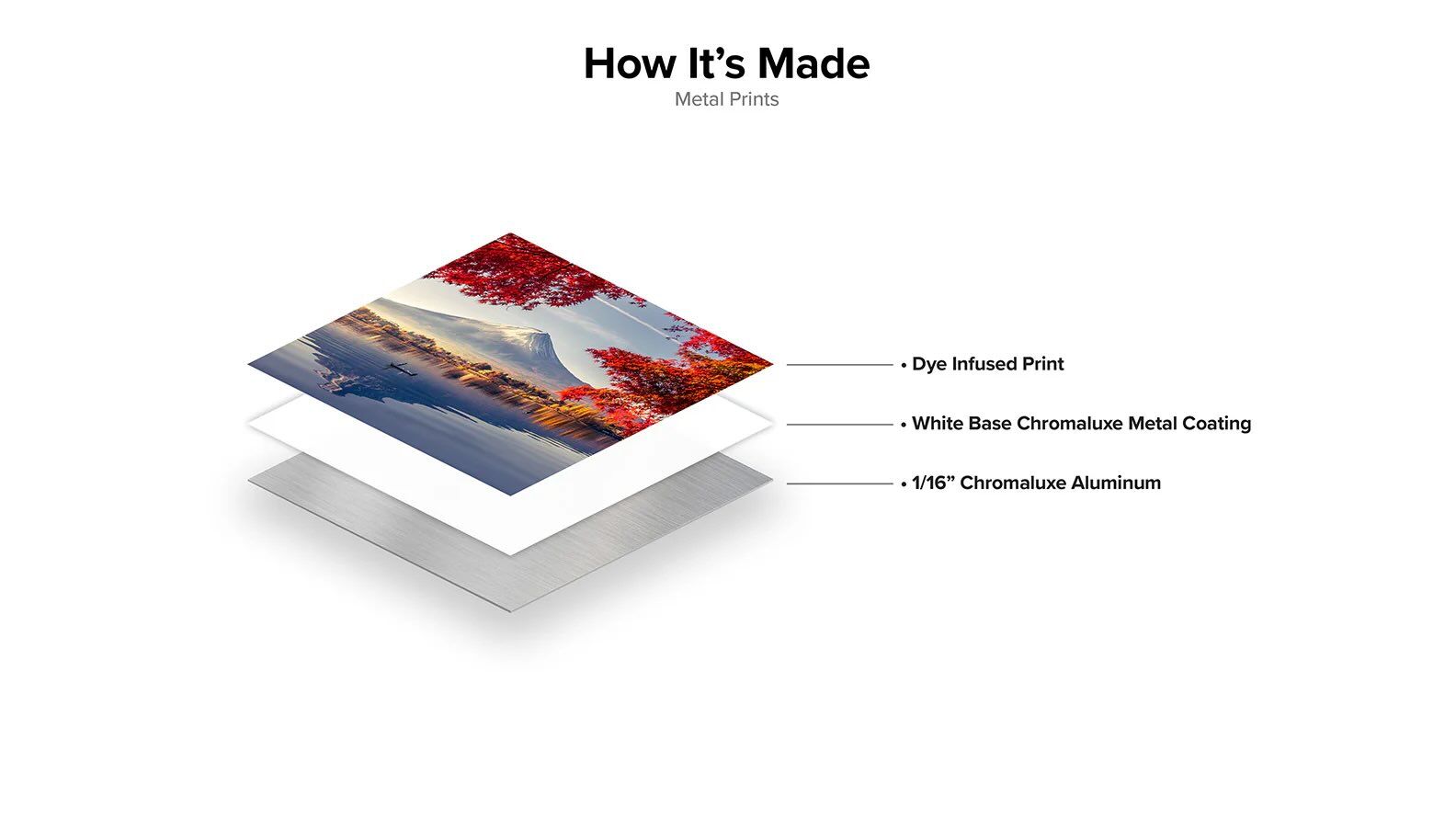
Each metal print is created using a dye sublimation transfer process. The image is first printed onto a special transfer paper using archival-quality dye-based inks. This print is then heat-pressed onto a specially coated aluminum panel, where the dyes transform into a gas and permanently bond with the metal surface. This infusion process results in a high-definition, ultra-durable print with remarkable depth, color accuracy, and longevity.
Why Choose Metal Prints?
- Vibrant Color & Exceptional Detail – The dye sublimation process produces ultra-high-definition clarity with rich, true-to-life hues.
- Sleek, Modern Design – The glossy finish enhances depth and brilliance while maintaining a clean, frameless presentation.
- Durable & Fade-Resistant – Waterproof, scratch-resistant, and UV-protected, these prints maintain their vibrancy for decades.
- Ready to Hang – No framing required. Each print includes a built-in floating mount for effortless installation.
Important Information
- Metal prints are printed at actual size and then machine-cut 1/8 inch smaller on all sides. For example, a 24” x 36” print will have a final size of 23.75” x 35.75”.
- Prints that do not fit in a standard 20” x 26” box will be shipped in a custom-made foam-lined crate for maximum protection.Shipping• Metal prints are securely packaged to ensure safe delivery.
- Each print arrives ready to hang with a sturdy mounting system for a sleek, floating effect on the wall.
For a bold, contemporary presentation, glossy metal prints are the perfect choice. Their vivid color, exceptional detail, and durability make them one of the most popular options for showcasing dynamic imagery.
TruLife® Acrylic Prints
Acrylic prints offer unparalleled color accuracy, sharpness, and depth, creating a luminous, almost three-dimensional effect. The high-gloss surface enhances vibrancy, making colors appear rich and dynamic. With exceptional durability and UV protection, these prints maintain their brilliance and clarity for years, making them an ideal choice for modern, high-impact displays.
How It’s Made
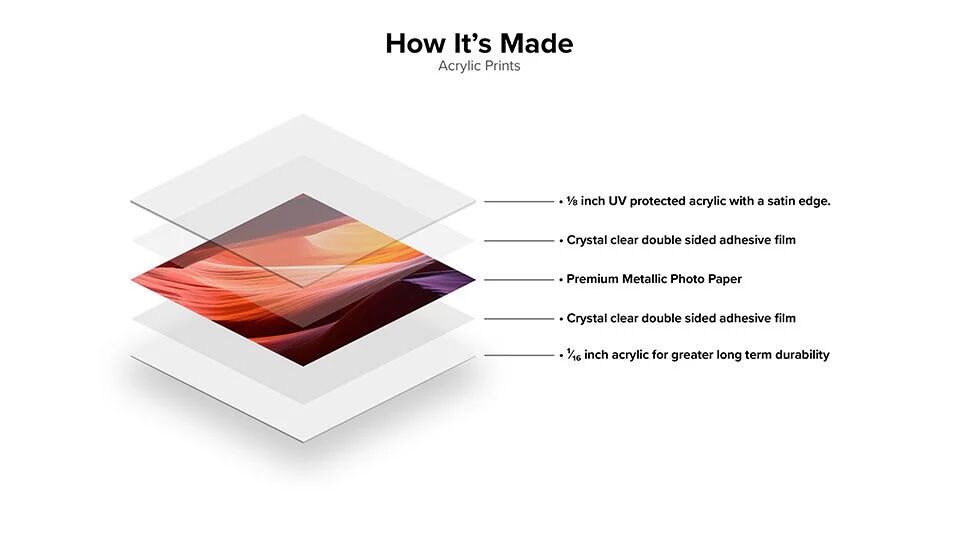
Each acrylic print is meticulously crafted using a five-layer process in a controlled cleanroom environment. The image is printed on metallic photo paper and seamlessly bonded between layers of crystal-clear adhesive and premium TruLife® Acrylic, enhancing depth and vibrancy. Every acrylic print undergoes precision CNC machine cutting, resulting in a flawless, satin-smooth edge.
Why Choose TruLife® Acrylic?
- TruLife® Acrylic is a museum-quality, anti-glare finish that eliminates distracting reflections while maintaining exceptional clarity and depth. Unlike standard acrylic, it:
- Minimizes reflections, ensuring that colors, textures, and details shine through even under direct lighting.
- Provides superior UV protection, preventing color fading and degradation over time.• Resists scratches and static, keeping prints free from dust and damage.
- Each acrylic print comes fully finished and ready to hang with a floating mount system, creating a sleek, frameless presentation.
Important Information
- Acrylic prints are printed at actual size and then machine-cut 1/8 inch smaller on all sides. For example, a 24” x 36” print will have a final size of 23.75” x 35.75”.
- Prints that do not fit in a standard 20” x 26” box will be shipped in a custom-made foam-lined crate for maximum protection.
For a museum-grade, gallery-quality presentation, TruLife® Acrylic prints deliver unmatched brilliance, durability, and visual impact—ready to be showcased the moment they arrive
Recessed Hanger System for Metal and TruLife® Acrylic Prints
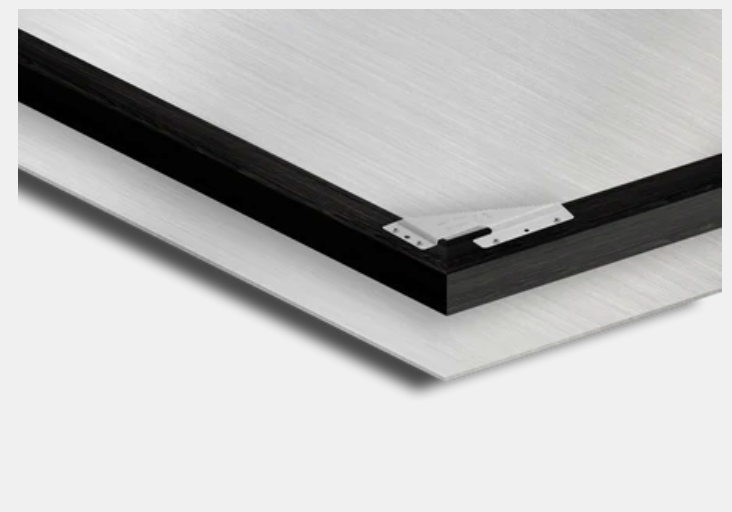
There is no additional charge for this framing option.