
Soap Bubbles and Film
We loved bubbles when we were kids.
A little soap, a little water, and suddenly there were shimmering spheres floating through the air. We chased them, tried to catch them, and watched them burst. Their appeal was simple and immediate. They were colorful, unpredictable, and fun.
Years later, I found myself looking at bubbles again, this time through a camera lens.
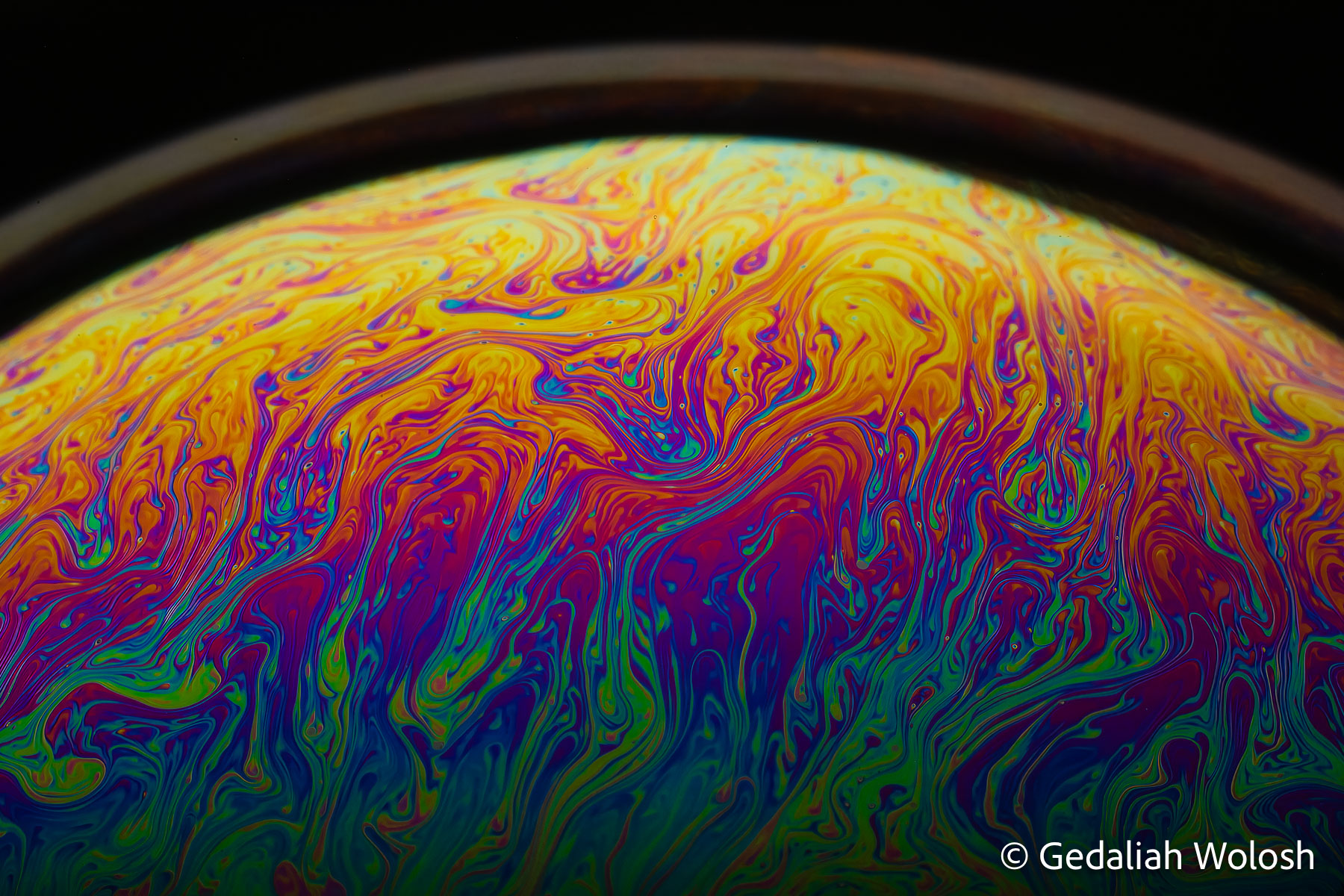
Complex flow patterns emerge within a draining soap film. The colors are produced by thin-film interference as variations in film thickness evolve across the bubble surface.
What I discovered was that the colors were only part of the story.
Within a soap film only a few microns thick, gravity, surface tension, fluid flow, and light combine to create an ever-changing world of color and form.
The patterns evolve from moment to moment, forming shapes that sometimes resemble landscapes, weather systems, rivers, mountains, and even distant planets.
By gently blowing on the bubble through a straw, I could introduce turbulence into the film, creating an endless variety of swirling patterns and transient forms.
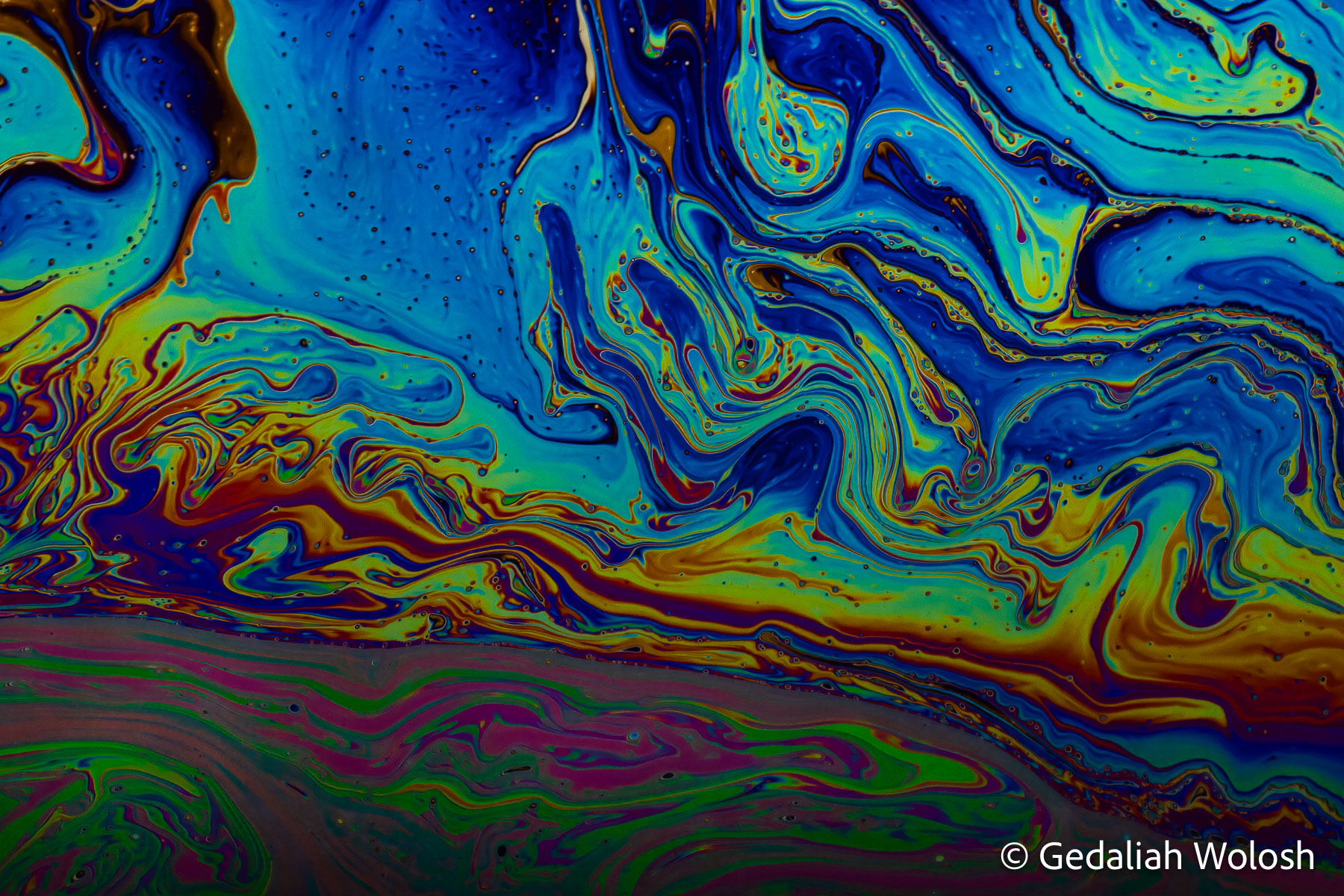
Broad blue regions and winding ribbons of color evoke an aerial view of ocean currents. The composition was formed naturally by shifting thickness variations within a soap film illuminated by diffuse light.
At some point I stopped thinking about the subject as a soap film.
The images began to stand on their own. Some suggested aerial photographs of coastlines and river systems. Others looked like satellite images of weather patterns or distant planetary surfaces. The resemblance was an illusion created by scale, yet it was remarkably persistent. Familiar forms seemed to emerge from a process governed entirely by physics.
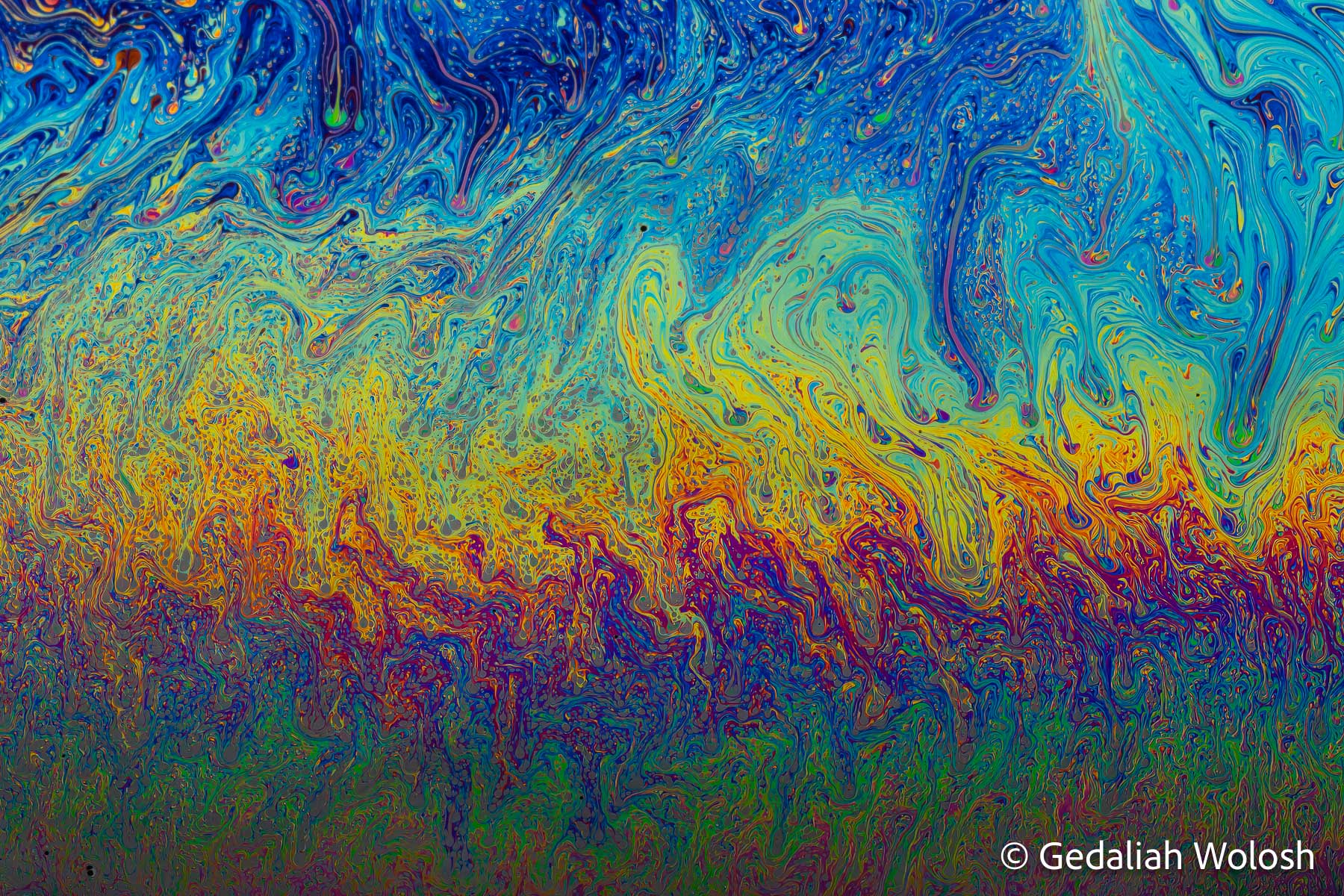
Gravity-driven drainage within a soap film creates a luminous boundary between cool and warm interference colors. The resulting structure evokes flames, turbulence, and heat rising through a darkened landscape.
As the film thinned, regions of instability developed and new structures emerged. Moments before collapse, the surface often produced some of its most intricate and unexpected patterns.
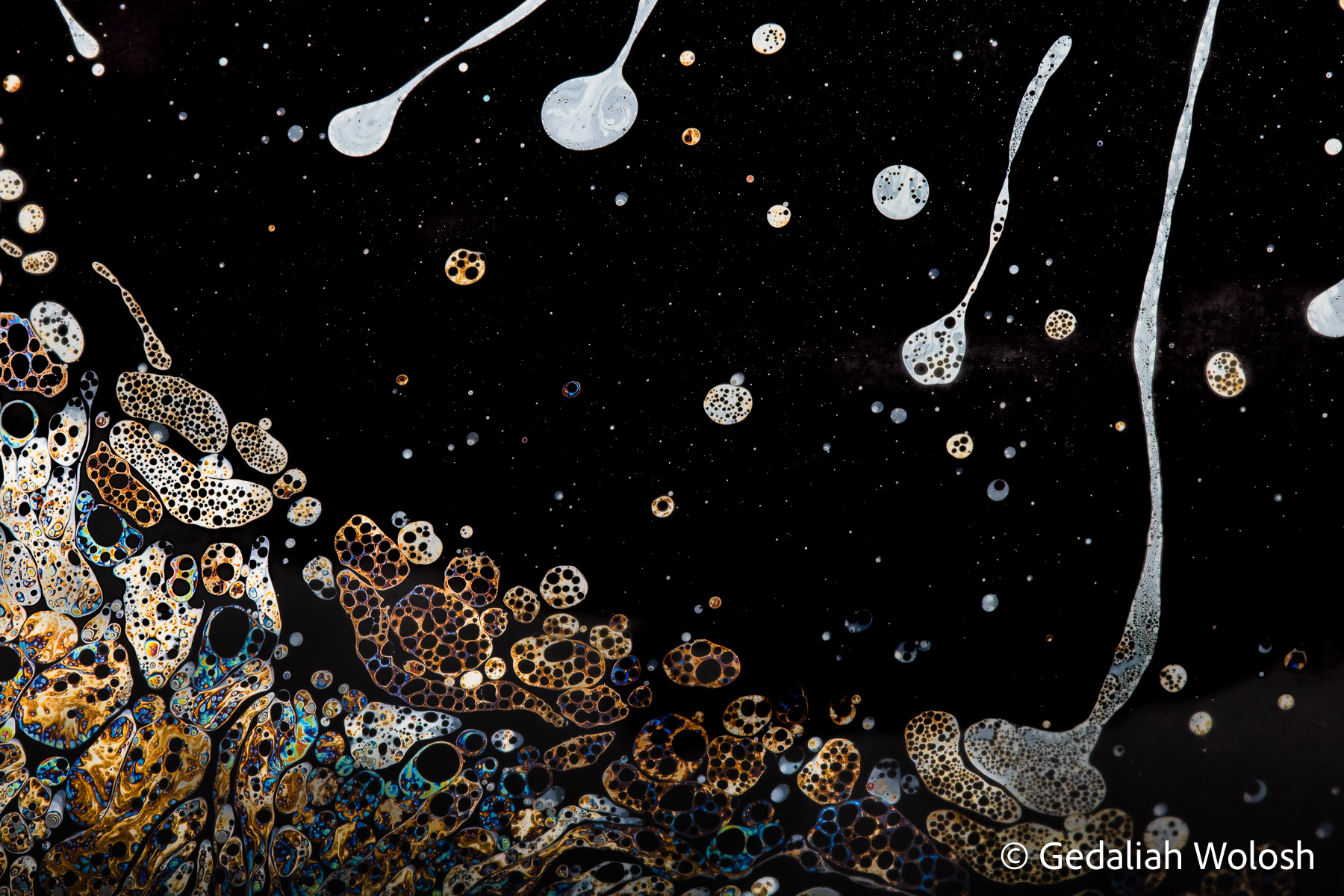
Cellular structures advance into a field of darkness while suspended droplets drift overhead. Created within a soap film only microns thick, the image evokes a frontier between order and emptiness at a scale far removed from everyday perception.
What surprised me most was how much variety could emerge from such simple materials. Water, soap, glycerin, gravity, and light were the only ingredients. Yet together they produced an endless sequence of forms that could never be repeated exactly.
Every image in this series records a fleeting moment in a process that was constantly changing. A few seconds earlier or later, the scene would have been entirely different.
For me, bubbles never lost their magic