
From Microns to Light Years
Most of my photographic work focuses on subjects that are very small and very close.
Using macro lenses, microscope objectives, focus stacking, and controlled lighting, I spend much of my time exploring structures measured in millimeters and microns. Insects, soap films, and other everyday objects often reveal extraordinary detail when viewed at high magnification.
Recently, however, I have found myself looking in the opposite direction.
Astrophotography explores objects that are unimaginably large and unimaginably distant. Instead of photographing structures measured in microns, I am recording structures measured in light years. Instead of subjects sitting a few centimeters from the camera, I am imaging objects hundreds, thousands, or even millions of light years away.
At first glance, macro photography and astrophotography seem to have little in common. One examines the very small while the other explores the very large. Yet both are driven by the same desire: to reveal things that exist beyond ordinary perception.
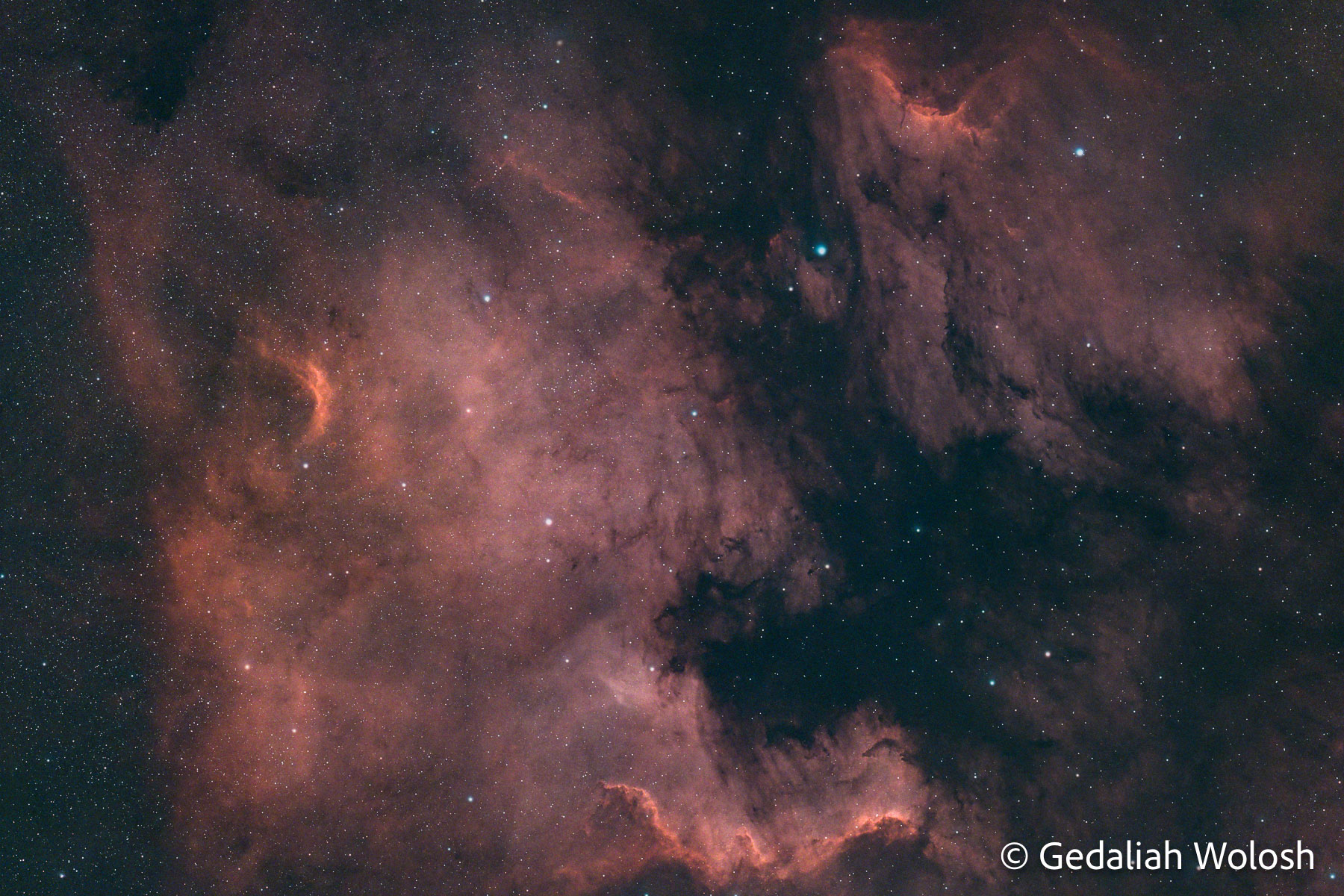
A vast emission nebula in the constellation Cygnus. Hydrogen gas illuminated by young stars creates the characteristic red glow and the continent-like shape that gives the nebula its name.
Neither world is readily visible.
In macro photography, magnification reveals details that our eyes cannot resolve. The scales on a butterfly wing, the structure of an insect’s eye, or the flowing colors of a soap film become visible only when the subject is enlarged.
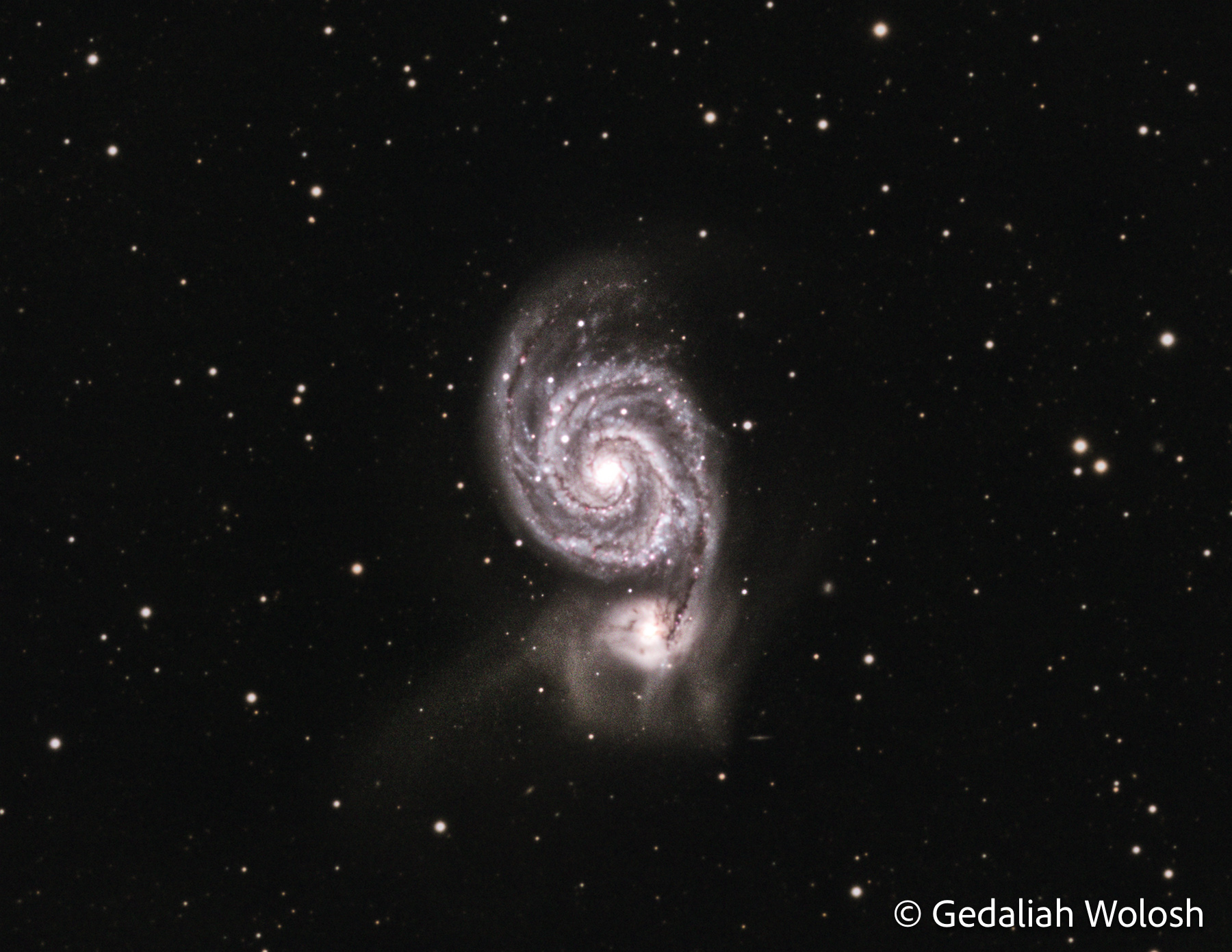
The interacting galaxy pair M51 and NGC 5195. Gravitational forces have shaped the Whirlpool Galaxy’s prominent spiral arms and triggered regions of active star formation.
Astrophotography works in a similar way. The Whirlpool Galaxy shown above appears as a faint smudge through modest telescopes, yet long exposures reveal spiral arms, dust lanes, and regions of star formation that would otherwise remain hidden.
In both cases, the camera becomes more than a recording device. It becomes an instrument of discovery. Whether examining a structure measured in microns or a galaxy containing billions of stars, photography allows us to explore realities that exist beyond normal human vision.
The subjects are vastly different, but the experience is surprisingly similar. The excitement comes from seeing something for the first time that was always there, waiting to be revealed.
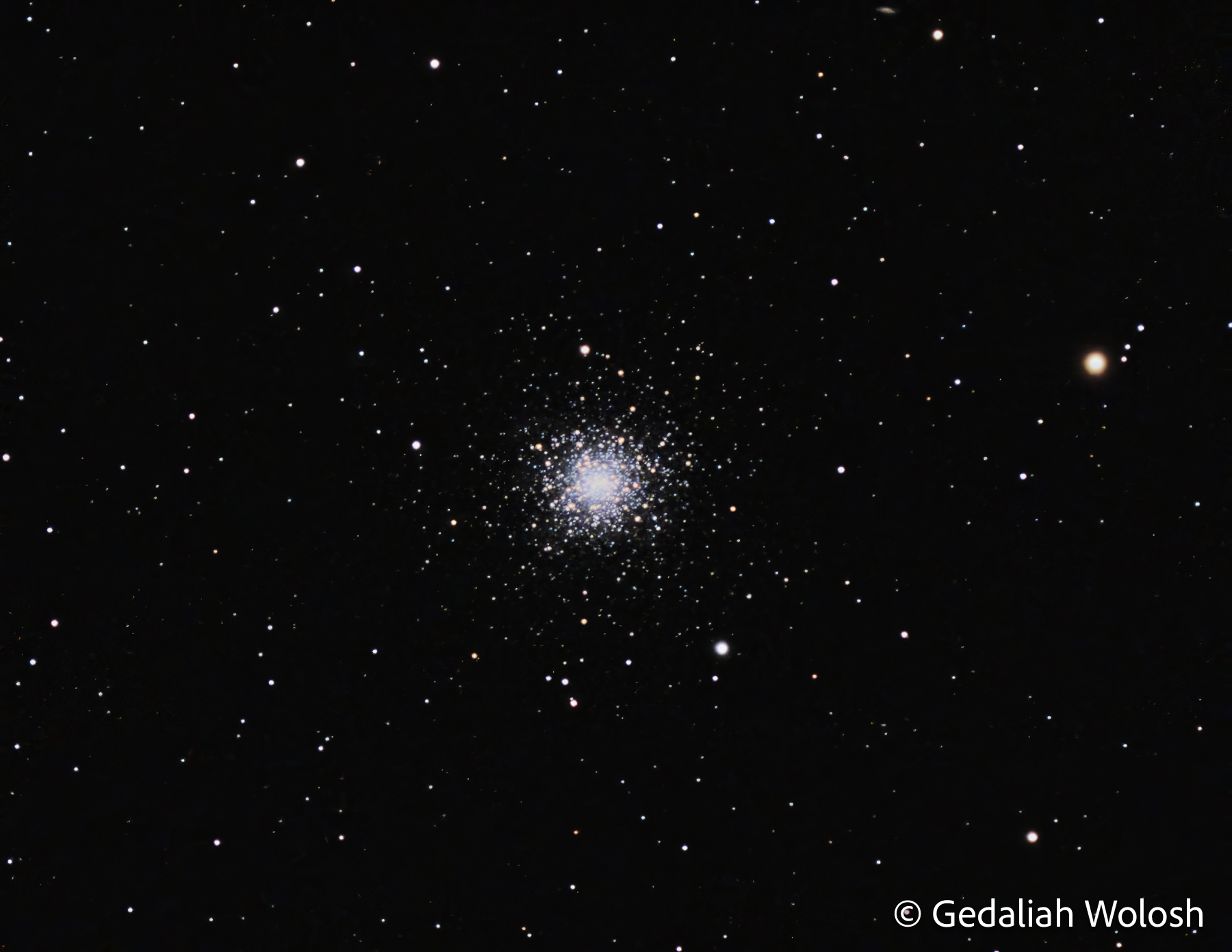
Messier 3 is one of the largest globular clusters visible from the Northern Hemisphere. Hundreds of thousands of ancient stars are packed into a dense spherical system orbiting the Milky Way.
The process is also remarkably similar.
Many of my macro photographs are not single exposures. A highly magnified insect portrait may require dozens or even hundreds of images taken at different focus positions and combined into a single photograph. The final image is built from many individual frames, each contributing a small piece of the whole.
Astrophotography often follows the same philosophy. The image above, Messier 3, is composed of many exposures collected over time and combined to reveal faint stars and subtle detail. A single frame captures only a fraction of the available information. Patience and accumulation are essential parts of the process.
Whether stacking focus slices of an insect or integrating hours of starlight from a distant object, the goal is the same: to reveal a level of detail that cannot be seen in a single exposure.
The tools and subjects may differ, but both disciplines reward careful technique, persistence, and a willingness to let the final image emerge gradually.
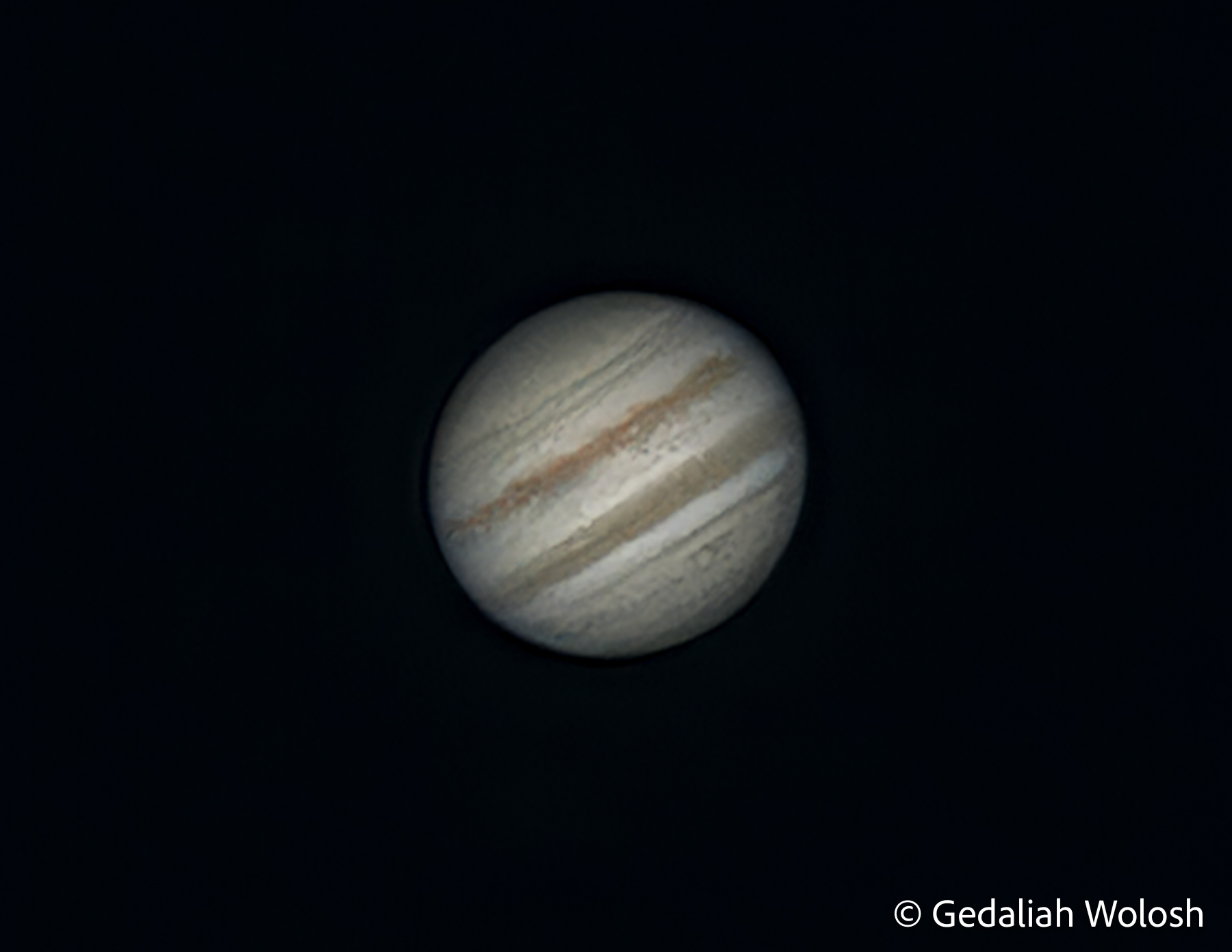
The largest planet in the Solar System. Atmospheric bands, storms, and subtle color variations reveal a dynamic world dominated by powerful winds and turbulent weather systems.
Not all astronomical subjects are distant.
The image above shows Jupiter, the largest planet in our Solar System. Unlike the nebulae, galaxies, and star clusters in this article, Jupiter is close enough that its changing cloud belts and atmospheric features can be observed from night to night.
Yet the sense of discovery remains the same. Whether I am photographing a microscopic structure under controlled studio lighting or a planet hundreds of millions of miles away, the appeal lies in revealing details that would otherwise go unnoticed.
Photography is often described as a way of seeing. For me, macro photography and astrophotography represent two extremes of that idea. One explores the hidden complexity of the very small. The other reveals the vast structures of the universe beyond our world.
Between them lies a remarkable range of scales, from microns to light years, all waiting to be discovered.